
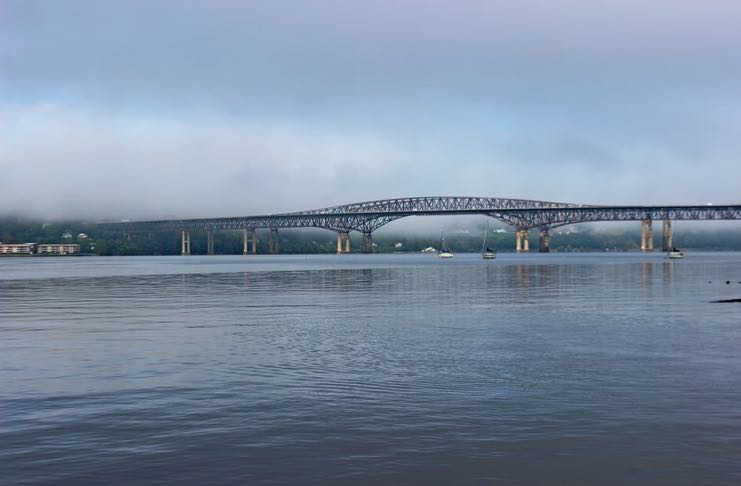
There’s a noticeable change as the Hudson Valley comes into view. The streets feel less compressed, the skyline gives way to ridgelines, and the day begins to unfold at a more comfortable pace. Located within a few hours of New York City, the region has long been a place people turn to when they want space, fresh air, and a setting that feels more grounded. Historic towns line the river, while trails, farms, and cultural sites sit just a short distance apart. As a result, even a brief visit can feel full without ever feeling rushed.
Towns That Invite You to Linger
The Hudson Valley is shaped by its towns, each offering a slightly different way to spend your time. Some center around art and design, while others lean into history or outdoor access. Moving between them, you begin to notice how each place carries its own identity, yet still feels connected to the region as a whole.
- Beacon – Home to Dia Beacon, one of the country’s largest contemporary art museums, along with a Main Street filled with galleries, coffee shops, and locally owned stores.
- Hudson – Known for its design-forward identity, with antique shops, curated boutiques, and a dining scene that attracts both locals and weekend visitors.
- Cold Spring – A compact riverside village with views of the Hudson, easy access to Breakneck Ridge and other trails, and a relaxed, walkable center.
- Rhinebeck – A historic town with a strong sense of community, offering farmers’ markets, small shops, and cultural events throughout the year.
Watch this video to learn more:
What Fills a Day Here
Time here often builds around a mix of outdoor activity and small-town exploration. Mornings might begin with a hike in the Hudson Highlands or the Catskills, where marked trails range from moderate walks to more challenging climbs with wide views at the top. From there, many head toward historic sites such as Olana State Historic Site or the Vanderbilt Mansion, where the region’s past becomes part of the experience.
Afternoons tend to shift toward slower activities—visiting wineries, stopping at farm stands, or spending time along a town’s main street. Because these experiences are spread across different areas, moving between them becomes part of the day itself. Many visitors plan their routes in advance, and some choose premium ground transportation for added comfort when covering longer distances between towns, trailheads, and vineyards.
Watch this video to learn more about wine country in the Hudson Valley:
Food, Farms, and Local Flavor
Food plays a central role in how people experience the region, with many places reflecting what’s grown and produced nearby. From casual stops to more fine dining, the focus often stays on seasonal ingredients and local sourcing, which naturally shapes what ends up on the table.
- Many kitchens build their menus around what’s available locally, with places like The Roundhouse in Beacon reflecting seasonal ingredients in a consistent way.
- Wineries and cideries – Located throughout the valley, spots such as Benmarl Winery in Marlboro pair tastings with outdoor seating and views of the surrounding hills.
- Farm stands and markets – A reliable way to experience the region’s agricultural roots, with locations like Rhinebeck Farmers Market offering fresh produce, baked goods, and pantry staples. Watch this video to learn about
some more great markets in the Hudson Valley:
- Specialty producers – Cheese makers, bakeries, and small-scale producers add another layer, often with items you won’t easily find elsewhere.
A Landscape That Changes with the Seasons
The region does not look or feel the same from one season to the next, and that shift plays a key role in how time is spent here. Because of these changes, timing can influence not just what you see, but how each place feels.
- Fall tends to draw the most attention, as hills turn shades of red and gold, especially along the river and at higher elevations. Planning ahead helps if you want to avoid larger crowds.
- Spring brings early color and quieter surroundings, while summer fills the area with greenery and outdoor dining. In these months and in early summer, you have easier access to popular spots, with a more relaxed overall pace.
- Winter, by contrast, offers a more subdued setting, where towns feel calmer, and the scenery takes on a quieter tone.
It also helps to think about how time and distance shape the day. While individual towns are easy to explore on foot, getting from one place to another can take longer than expected, so focusing on a few key stops often leads to a more enjoyable experience. Checking opening hours in advance for farms, wineries, and historic sites is just as useful, since schedules can shift with the seasons.
Making the Most of Your Time
A well-spent visit in the Hudson Valley usually comes down to focus. Choosing one or two towns allows time to settle in, rather than moving constantly from place to place. Weekdays often feel more relaxed, while weekends bring more activity to shops, markets, and restaurants. At the same time, aligning your visit with your interests—whether that’s hiking, food, or local culture—can make each stop feel more intentional. This region doesn’t ask for a packed schedule. It rewards a steady pace, where each stop has room to be experienced fully, even if your time there is limited.







 Sarah Knapp is a Brooklyn based entrepreneur whose love for the outdoors and community building led her to the October 2013 creation of OutdoorFest. She has a BA in History, is a Wilderness First Responder and a NY state
  Allison was one of our first top writers and Chief Editor but is no longer working with offMetro. Allison is a native New Yorker, who has lived in Rome, Tuscany, Melbourne, Toronto and Los Angeles. She frequently contributed travel pieces to Family Travel Forum, using her own children as guinea pigs as they travel the globe. She never missed a chance to sample local delicacies, as her love for travel goes hand-in-hand with her love for food and
  Josh Laskin is a freelance travel writer and photographer based in the White Mountains of New Hampshire. When he is not at work or on the road, you can find him in the mountains snowboarding, climbing, hiking, fly fishing, mountain biking, and eating bagel bites.
 Annie is a travel writer, environmentalist, and surfer based in Venice, CA. She heads up our West Coast team, keeps our grammatical errors in check, and makes sure our California writers always have a plan for their next adventure. Follow Annie’s travels @annelisemcb.
 Carly Pifer is a freelance writer who has been known to follow whims inspired by romantic movie scenes or colorful street style shots to India, Japan, Tunisia and Argentina. After stints living in Seoul, Boston, Paris and Los Angeles, writing and searching for something intangible, she landed somewhat steadily in Brooklyn and has begun to find inspiration in her more immediate surroundings.
  Kate E. O’Hara is a New York based freelance writer and photographer who loves all things food—especially the people who make it and market it. Her writing aims to capture the essence of the food experience; the stories that go well beyond a plate of ingredients. In addition to her love of food, Kate is also known to have a hankering for red wine and craft beer. You can also find Kate on Instagram