
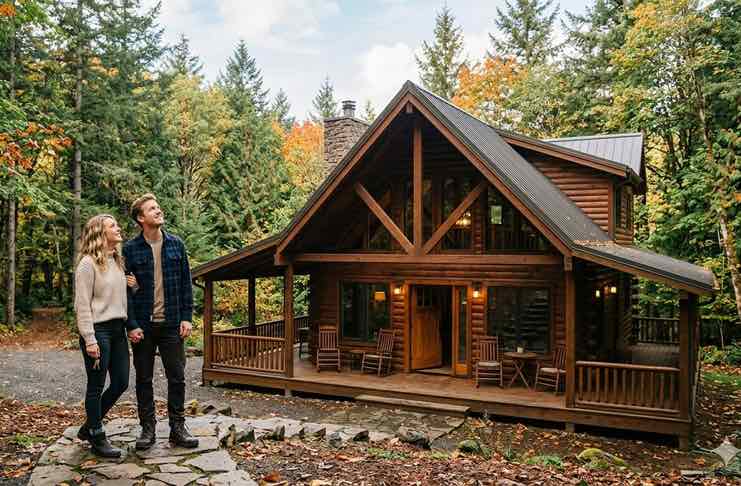
Buying a vacation home is one of the most exciting decisions a traveler can make — a place that’s always yours, waiting at the end of a long drive or a short flight. But it’s also a serious financial commitment, and it’s easy to let the romance of the purchase push your budget further than it should go. Here’s what we’ve learned on the road, and what the experts say, about finding the perfect getaway property without breaking the bank.
Tip 1: Set a Realistic Budget — One That Includes Everything
Before you start browsing lakefront listings or mountain cabins, nail down a hard number. Your vacation home budget needs to go well beyond the purchase price. Factor in property taxes, homeowner’s insurance (which tends to be higher on second homes), HOA fees if applicable, ongoing maintenance, furnishings, and the cost of traveling to and from the property each season.
A good rule of thumb used in the industry is to set aside roughly 1% of the home’s purchase price annually for maintenance alone. A $400,000 cabin means budgeting at least $4,000 per year just to keep it in good shape — before a single unexpected repair.
According to IRS Topic 415 on vacation and rental property, if you plan to rent your vacation home even part of the time, you’ll also need to account for how that rental income and associated expenses interact with your tax obligations. Understanding these costs upfront prevents nasty surprises later.
Our Experience
On a road trip through the Laurentians in Quebec, we stopped for coffee and ended up in a long conversation with a couple who had purchased a chalet the previous winter. They told us they’d underestimated their annual costs by nearly 30% — mostly because they hadn’t thought through snow removal contracts, seasonal deep-cleaning, and the premium their insurer charged for a property that sat empty five months of the year. “Budget for the surprises,” the husband told us, “because there will always be surprises.”
Tip 2: Get Pre-Approved for a Second-Home Mortgage
Financing a vacation home is a different beast from financing a primary residence, and many first-time second-home buyers are caught off guard. Lenders typically require stronger credit scores, lower debt-to-income ratios, a larger down payment (often 10–20%), and additional cash reserves. Going in pre-approved shows sellers you’re serious and lets you focus only on properties you can genuinely afford.
The Consumer Financial Protection Bureau (CFPB) notes that second-home loans carry higher interest rates than primary residence loans due to the increased risk lenders take on. Knowing this in advance lets you factor the true monthly cost into your planning rather than discovering it at the closing table.
Our Experience
We met a family from Minneapolis at a small inn in Canmore, Alberta, who’d been searching for a mountain getaway for nearly two years. They told us the turning point came when they got formally pre-approved — suddenly agents took them seriously, and they stopped wasting weekends touring properties $100K above their actual ceiling. “Pre-approval wasn’t a formality,” the mother said. “It was the thing that made our search real.”
Tip 3: Explore Up-and-Coming Vacation Destinations Before They Peak
The most sought-after vacation markets — Whistler, Muskoka, Bend, the Florida Keys — are also the most expensive. Some of the best vacation home purchases we’ve ever heard about happened in places that were on the verge of discovery rather than already fully discovered.
Look for towns with growing tourism infrastructure: a new regional airport, improved highway access, a cluster of good restaurants and breweries, or a recent boost in outdoor trail development. These are signals that a destination is building momentum — and that prices are still reasonable enough to get in early.
According to research from the National Association of Realtors, vacation home counties saw median sales prices rise significantly faster than non-vacation areas during the last major second-home buying wave — a pattern that tends to repeat as destinations gain mainstream popularity. Getting in ahead of that wave is where the value is.
Watch this news reel to learn more:
Our Experience
During a weekend in the Kootenay Rockies in British Columbia, we stayed at a B&B run by a retired couple who had purchased their property a decade earlier when the valley was still largely unknown. They laughed when they told us what they’d paid compared to what similar properties were listing for now. “We just liked how quiet it was,” the owner said. “We had no idea everyone else would eventually figure that out too.”
Tip 4: Focus on Structure and Location, Not Surface Appearance
Vacation home shoppers often skip over properties that haven’t been staged for Instagram. Dated décor, tired landscaping, or an unfashionable paint palette can make a structurally excellent property look uninviting in listing photos — which means less competition and more room to negotiate.
What you cannot easily change about a vacation home is the lot, the bones, the view, and the location. What you absolutely can change: flooring, fixtures, cabinetry, paint, landscaping, and furnishings. A property with a great site and a solid structure that needs a cosmetic refresh is often far better value than a beautifully staged home that sits on an awkward lot or in a less desirable pocket of town.
As U.S. News & World Report points out in its vacation home buying guide, properties intended for personal use and eventual rental are best evaluated on access, rental potential, and long-term market dynamics — not on how the current owner decorated the living room.
Our Experience
A couple we met at a farmers’ market in Prince Edward County, Ontario, told us they’d almost passed on their lakefront cottage because the 1980s wallpaper had given them pause during the showing. They pushed through, bought it well under asking, and spent a modest amount on a gut renovation. “Every neighbor we have paid more for less,” the wife told us with a grin. “All because we could see past some bad wallpaper.”
Tip 5: Compare Markets Across Multiple Cities and Regions
One of the most powerful tools in any vacation home search is a willingness to look beyond the first destination that comes to mind. Comparing listings across several markets gives you a calibrated sense of what your budget actually delivers in different regions — and the results can be eye-opening.
Travelers who dream of the Canadian Rockies or Pacific Coast, for example, often discover that prices in prime resort markets are simply out of reach. That frequently sends buyers north and east toward cities where the lifestyle quality is high, but the price per square foot is far more reasonable. If you’re looking at Western Canada specifically, searching for the best houses for sale in Calgary under 500,000 dollars is a smart starting point — Calgary offers urban proximity, stunning mountain access within two hours, a strong job market, and vacation home prices that still allow buyers to stretch their dollar in ways that Vancouver simply doesn’t.
The same logic applies in other regions. Compare markets in Kelowna versus Penticton, or Collingwood versus Owen Sound, or Asheville versus Hendersonville. The differences in price for similar properties can be substantial, and the lifestyle trade-offs are often minimal.
Our Experience
We crossed paths with an Ontario family at a coffee shop in Banff who’d spent six months agonizing over whether to buy in Canmore before doing a broader regional search. By widening their scope to include Calgary’s surrounding foothills communities, they found a four-bedroom property with mountain views for a price they couldn’t have gotten within 20 minutes of Banff. “Canmore was the dream,” the father said, “but this turned out to be the smarter dream.”
Tip 6: Be Patient — The Right Deal Will Come
The vacation home market moves fast in peak seasons, but that same urgency can lead buyers into overpaying. If you monitor the market consistently over several months, patterns begin to emerge: certain properties sit longer than they should, seasonal price reductions appear in the fall, and motivated sellers become visible when a home has been relisted multiple times.
Patience also gives you the chance to visit your target destination in different seasons, which is critical for a vacation property. A lake house that feels idyllic in August may have road access issues in March. A mountain cabin that seems remote and peaceful in October may be surrounded by snowmobile traffic in February. Visit before you buy, and visit more than once.
The HGTV Second Home Buyer’s Guide has long recommended that buyers spend time in an area as renters before committing to a purchase — a simple step that many eager buyers skip to their eventual regret.
Our Experience
A solo traveler we met during a writing retreat in Nova Scotia had been searching for a coastal property for three years before finding the right one. She described the process as “aggressively patient” — she knew what she wanted and refused to settle. When the right property finally appeared at a reduced price after a failed sale, she was ready to move immediately. “Everyone told me I was being too picky,” she said. “But I’ve never once regretted waiting.”
Tip 7: Consider Different Property Types — Not Just Detached Homes
Many vacation home buyers have a fixed image in mind: a freestanding house with a yard, a wraparound porch, and a long driveway. But locking onto that template can significantly limit your options and your value. Condominiums in resort buildings, townhouses in ski villages, half-duplexes on waterfront streets, and smaller homes in developing communities can all deliver exceptional vacation experiences at meaningfully lower price points.
Condo properties in particular often come with added advantages for part-time owners: managed maintenance, shared amenities like pools and gyms, and in some cases, on-site rental management programs that make it easy to rent the unit when you’re not using it. For buyers who want the vacation experience without the full burden of property ownership, this can be an ideal structure.
Just be sure to understand the short-term rental rules specific to the building or development you’re considering. As U.S. News & World Report notes, local zoning regulations and HOA rules can vary widely — and some communities prohibit short-term rentals entirely, which can significantly affect both your usage flexibility and your investment return.
Our Experience
At a wine bar in Kelowna, British Columbia, we spent an evening talking to a couple who’d given up on finding a detached lakefront home in their budget and purchased a two-bedroom condo in a resort development instead. They had access to a private beach, a pool, and a concierge rental program that covered their strata fees most years. “It’s not the romantic cottage we imagined,” one of them admitted. “But we love it more than we would have loved the stress of maintaining a house we could barely afford.”
Tip 8: Work With an Agent Who Specializes in Vacation Properties
Not all real estate agents are created equal, and this is especially true in the vacation home market. A good local agent isn’t just someone who can open doors — they know rental yield histories, seasonal demand patterns, local short-term rental bylaws, and the specific quirks of different neighborhoods and developments. They’ll save you from expensive mistakes that general buyers’ agents simply don’t know to flag.
The National Association of Realtors offers a specific designation for vacation and resort market specialists: the Resort and Second-Home Property Specialist (RSPS) accreditation. Seeking out an agent with this credential, or with demonstrable experience in the specific market you’re targeting, can make a meaningful difference in both the quality of your search and the strength of your negotiating position.
Our Experience
While exploring the Eastern Townships of Quebec one fall, we spoke with a retired teacher who’d been burned early in her vacation home search by working with a general residential agent who knew nothing about seasonal access restrictions or local rental bylaws. When she switched to an agent who specialized in recreational properties, the entire experience shifted. “She knew everything,” the buyer told us. “And she saved me from a property that would have been a nightmare — I just didn’t know enough to know that yet.”
Tip 9: Think About Long-Term Value, Not Just the Weekend Escape
A vacation home is an emotional purchase, but it’s also a financial one. The best vacation home buyers hold both of those truths at once. They buy properties that fill them with joy and also make sound investment sense — properties in areas with growing appeal, strong rental markets, good access, and the kind of natural or cultural amenity that draws people back year after year.
Also worth understanding: the tax treatment of vacation homes is nuanced and depends significantly on how much time you spend there versus how many days you rent it out. IRS Publication 527 outlines the rules in detail — including a notable provision that rental income may be entirely tax-free if you rent your home for fewer than 15 days per year. Understanding these rules before you buy gives you more flexibility in how you structure your ownership.
Properties near growing communities, expanding infrastructure, and year-round attractions tend to appreciate most consistently over time. A cabin two hours from a major city with improving road access will likely outperform an equally charming property in a location with declining visitor traffic or a single-season appeal.
Our Experience
On a cycling trip through the Cowichan Valley on Vancouver Island, we met an older couple who had owned their vacation property for eighteen years. They’d initially bought it simply because they loved the area — the wine, the slow pace, the warmth. But they’d also watched it grow into one of the most popular agri-tourism destinations in western Canada, and their investment had grown accordingly. “We bought with our hearts,” the husband told us. “But the math worked out beautifully.”
Quick Tips for Staying Within Budget
- Set a firm maximum budget before your first showing — and hold it
- Visit the property and destination in at least two different seasons before buying
- Factor in travel costs to the property as part of your annual ownership budget
- Understand local short-term rental bylaws before assuming rental income
- Research property tax rates and any special assessments in the area
- Avoid emotional bidding wars — vacation homes are not in short supply everywhere
- Prioritize lot, location, and structure over cosmetic details every time
Finding a great vacation home without overspending is absolutely achievable — but it requires patience, research, and a willingness to let go of the first picture you had in your head. The travelers and buyers we meet on the road who are happiest with their vacation home purchases are the ones who stayed disciplined, looked broadly, thought long-term, and worked with people who genuinely knew their chosen market. The dream property is out there. The goal is to find it before it finds your regret.
Frequently Asked Questions About Buying a Vacation Home
How much should I budget for a vacation home beyond the purchase price?
Most financial advisors suggest setting aside 1–2% of the home’s value annually for maintenance and repairs alone. On top of that, budget for property taxes, insurance (which typically runs higher on second homes), seasonal utilities, furnishings, and your own travel costs to and from the property. A $400,000 vacation home can realistically cost $15,000–$25,000 per year to own before your mortgage payment.
Is it harder to get a mortgage for a vacation home than a primary residence?
Yes. Lenders generally require a higher credit score, a larger down payment (often 10–20%), and proof of sufficient cash reserves. Interest rates are also slightly higher on second-home loans than on primary residences. Getting pre-approved before you start shopping is strongly recommended.
Can I rent out my vacation home when I’m not using it?
In most cases, yes — but the rules vary significantly by location. Some municipalities and HOA communities restrict or outright prohibit short-term rentals. Before buying, always verify local zoning bylaws and any building-specific rental policies. The tax treatment of rental income also depends on how many days per year you rent versus personally use the property.
What are the best affordable vacation home markets in Canada?
Western Canada buyers who find Vancouver and Whistler out of reach often turn to markets like Calgary, Kelowna, the Okanagan Valley, and the BC Interior. Calgary in particular offers strong value — with houses for sale in Calgary under $500,000, buyers can access a major city with proximity to the Rockies at a fraction of what comparable properties cost closer to the mountains. Winnipeg and Edmonton also offer affordable entry points with growing amenity scenes.
How do I know if a vacation destination is a good long-term investment?
Look for year-round appeal rather than single-season draw, growing tourism infrastructure (improving roads, new restaurants, trail development), proximity to a major population center, and a healthy short-term rental market. Destinations that are gaining popularity but haven’t yet peaked in price tend to offer the best combination of lifestyle value and long-term appreciation.
Should I buy a detached vacation home or consider a condo or townhouse?
Both can be excellent choices depending on your goals. Detached homes offer more privacy and space but come with higher maintenance responsibilities. Condos and resort townhouses often include managed upkeep, shared amenities, and rental management programs — which can be ideal for part-time owners. The right choice depends on how often you plan to visit, whether you intend to rent, and how hands-on you want to be with property management.
How many times should I visit an area before buying a vacation home there?
At least twice — ideally in different seasons. A lakeside property that feels perfect in July may have limited road access in winter. A ski chalet that seems quiet in September may sit next to a noisy terrain park in February. Renting in your target area for one or two seasons before buying is one of the smartest steps a vacation home buyer can take.