
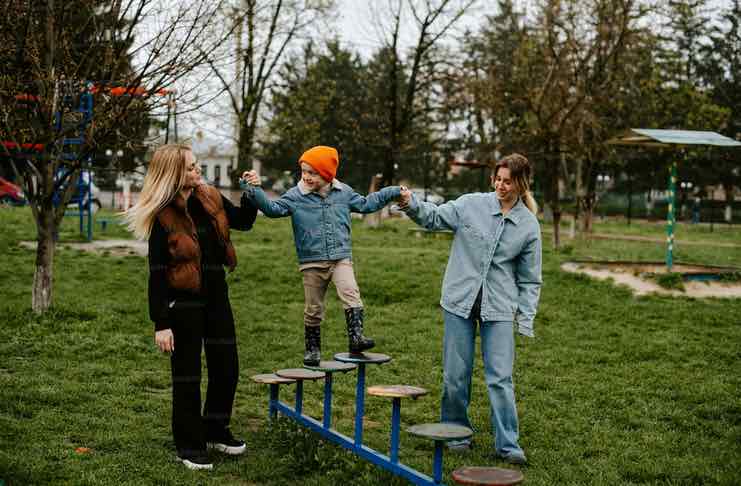
If you’ve ever had kids, you understand the value of a great playground. Indeed, some playgrounds are literally worth traveling miles to visit. Often, parents will plan a trip around a destination playground, choosing the hotel and food options based on where their kids can play. These locations also become hubs for community gatherings, events, and even just time to socialize. As part of our travel blog, here’s how you can create a play space that attracts visitors from all over:
Choose a Theme
One of the most important factors in a destination playground is the theme. Without a cohesive idea or concept, your space may just look like another big, chaotic playground that doesn’t necessarily attract visitors. Kids don’t just want to play. They want to imagine themselves in a different universe, battling dragons or soaring into space. A great theme will transport kids into their imaginations and challenge their bodies to develop and grow in healthy ways.
To choose a theme for your destination playground, take stock of a few things: the surrounding environment, the neighborhood demographic, and the themes of other local parks. For example, if your city is situated on a beach or other body of water, you can create a boat or pirate theme. If your neighborhood is made up of people from diverse cultures, you could create a desert, forest, or jungle theme. Your commercial swing sets can be “vines” hanging from “trees,” for example.
Add a “Wow” Factor
Of course, any neighborhood park can pull together a theme. What you’ll need to attract a larger, broader audience is the “wow.” There are magnificent, beautiful playgrounds that go unnoticed by all but the closest residents because they don’t act as magnets. Instead, they sit, underutilized and underappreciated. These parks may be hidden gems for the nearby neighbors, but they’re unlikely to end up on a list of “50 Best Playgrounds to Visit in the U.S.”
If you’re hoping to attract more tourists, you’ll want a “wow” factor. This is the thing that stands out from the street, encourages people to take pictures, and kids go home talking about it. Your “wow” might be a giant slide with rope ladders leading up to it. It could be a huge pirate ship that kids have to scale. It might even be a fabulous splash pad with climbing features during the off-season. Consider your theme and your neighborhood, and then decide what might make your park stand out.
Create Different Spaces
One factor that will keep your playground from becoming popular across regions is its size. If it’s too small, even if it’s super cute, it’s unlikely to get a ton of visitors. First, kids will grow tired of the space fairly quickly. Second, once it gets overcrowded, people will avoid it altogether. Too little space means a lack of sections and areas for different kids to explore different things. Inclusivity and attraction typically take up a lot of space.
So, if you’re hoping to bring in kids, parents, and travelers from far and wide, you’ll need to give them lots of options. Find a plot of land that allows for the development of local plant life, a grassy space, and multiple structures. You want your playground to offer options for all of the kids who visit, as well as older adults and caregivers. That way, kids can run around and choose from many ways to adventure, and parents can sit under a tree and read. Meanwhile, young adults can throw frisbees in the field.
Watch this video for some really unique playgrounds:
Ensure Graduated Challenges
Another critical element for a destination playground is graduated challenges. Many families have two or more kids, and often a big age gap exists. You might have a 10-year-old and a five-year-old in the same space. Obviously, they won’t want to play on the same equipment. They may not even enjoy the same swings. If you only cater to one age, you run the risk of losing families with kids of different ages and abilities.
You can ensure both graduated challenges and inclusivity in your park by creating multiple structures in different sections. Each one can have an element that caters to children with different abilities, like wider platforms that accommodate wheelchairs. Then, have your playground designer include graduated challenges for each age range. This way, virtually every single kid who comes to your park will find something to engage them. And that level of inclusivity is typically celebrated and shared far and wide.
Include Nature
Finally, and certainly not least importantly, is the need to include a natural element. Enough studies have been done to show that children who don’t have access to nature suffer on many levels. Time spent outside, with access to trees, plants, and the natural elements, benefits children’s brains, bodies, emotions, moods, and more. And often, parents look for parks that can give kids access to nature they so desperately need.
If you can choose a location near nature, you’ll have a much easier time integrating your playground into its surroundings. But even if you’re working with an area without trees, grass, or flowers, you can do a lot to improve the playground. You could plant fast-growing trees like willows or oaks, install mature bushes and flowers, and include a water feature that uses recycled water. This allows kids to get the exposure they need, and parents will be much more likely to plan a visit.
In the end, it doesn’t take much to create a destination playground. It would be a good idea to hold a meeting for your community. That way, you can ask for ideas for a theme and get feedback on a “wow” factor. You can also ask for insight into integrating local plants and natural features. Then, you’ll have a playground that truly belongs to the community and invites visitors from all over the country, maybe even the world.
Leave a Reply